


DX Geothermal: Your Guide to Waterless Heat Transfer for Home Comfort
Discover efficient, waterless home comfort with a direct exchange geothermal heat pump. Learn how it works & its benefits.


What Makes a Direct Exchange Geothermal Heat Pump Different?
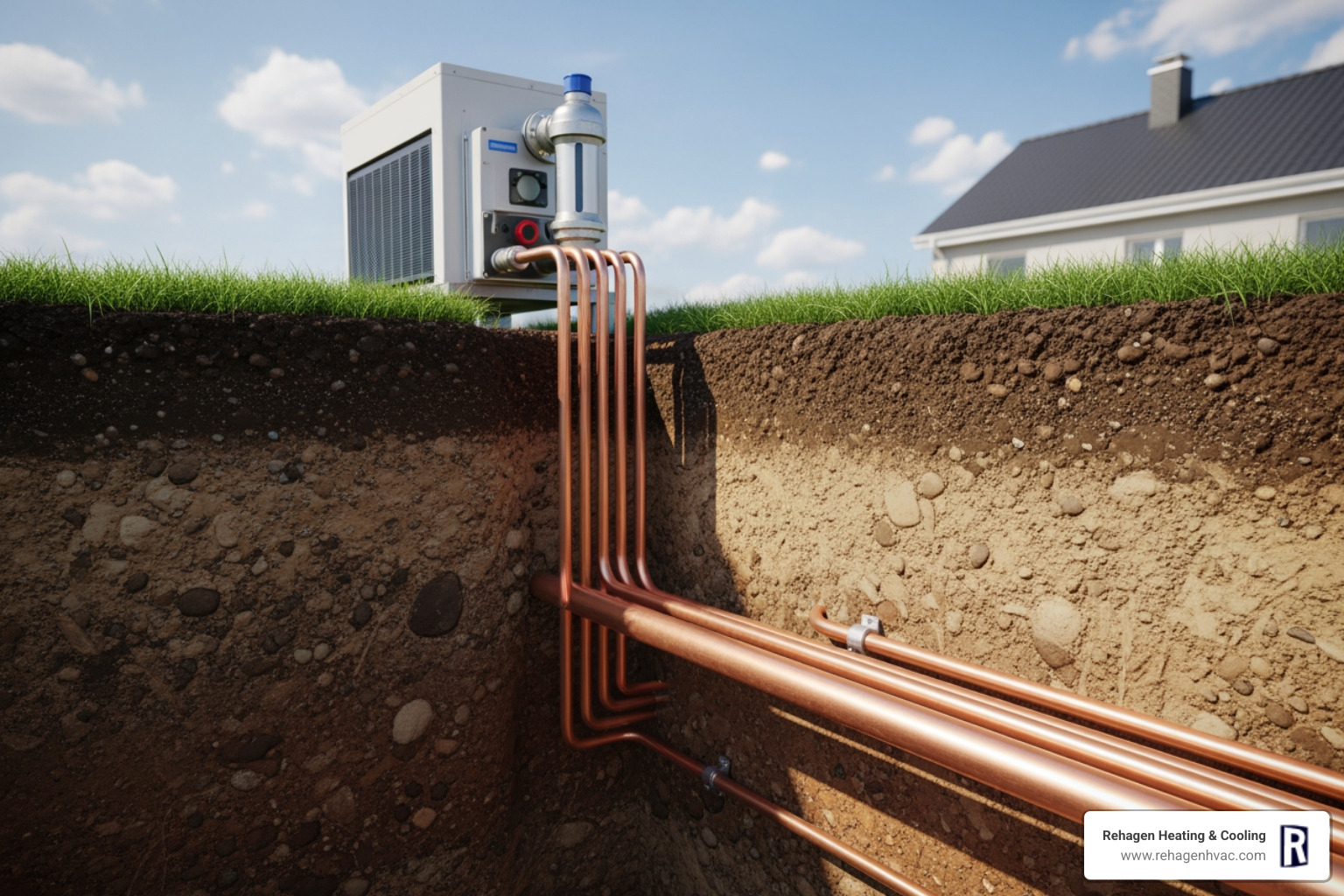
A direct exchange geothermal heat pump is a type of ground source heat pump that circulates refrigerant directly through buried copper tubing in the earth, eliminating the need for a secondary water loop found in traditional geothermal systems. This waterless design reduces heat transfer steps from three to two, resulting in higher efficiency and simpler operation for your home's heating and cooling needs.
Key Features of DX Geothermal Systems:
- Direct heat transfer - Refrigerant exchanges heat directly with the earth through copper pipes
- Two-stage process - Ground to refrigerant, refrigerant to air (vs. three stages in water-based systems)
- Waterless operation - No antifreeze, no circulating pumps, no water loop maintenance
- Copper tubing - Superior thermal conductivity allows smaller, less invasive ground loops
- System sizes - Available from 2 tons (7.03KW) to 6 tons (21.10KW) for residential applications
If you're a Central Missouri homeowner dealing with high energy bills or an aging HVAC system, understanding how DX geothermal works can help you make an informed decision about energy-efficient comfort. This technology has been around since the late 1940s when Robert C. Webber built the first geothermal heat pump using this direct exchange method. Modern improvements in materials, refrigerant management, and electronic controls have made today's DX systems more reliable and efficient than ever.
For more information about geothermal options in your area, explore our Geothermal Heat Pumps page, or contact Rehagen Heating & Cooling to discuss whether a DX system is right for your home.
Understanding the Basics of DX Geothermal
Here at Rehagen Heating & Cooling, we've seen how the earth provides a natural, stable energy source right beneath our feet. While surface temperatures in Central Missouri can swing wildly from scorching summers to freezing winters, just a few feet below ground, the earth maintains a remarkably consistent temperature, typically between 50 to 70 degrees Fahrenheit. This constant temperature is the secret to geothermal energy's incredible efficiency.
A direct exchange geothermal heat pump (often abbreviated as DX, or sometimes referred to as Direct Geoexchange (DGX), direct-expansion ground source heat pumps, or even Waterless Geothermal) harnesses this stable underground temperature to provide year-round comfort for your home. Unlike traditional heating and cooling systems that burn fossil fuels or rely on fluctuating outdoor air temperatures, a DX system simply moves heat to or from the earth. It's a remarkably simple, yet profoundly effective, concept.
In fact, the very first geothermal heat pump, built by Robert C. Webber in the late 1940s, was a DX system. This pioneering technology laid the groundwork for what we know today as one of the most energy-efficient and environmentally friendly ways to heat and cool homes. We're proud to offer this advanced technology to our neighbors across Central Missouri, including communities like Jefferson City, Columbia, and Ashland.
How a Direct Exchange Geothermal Heat Pump Works
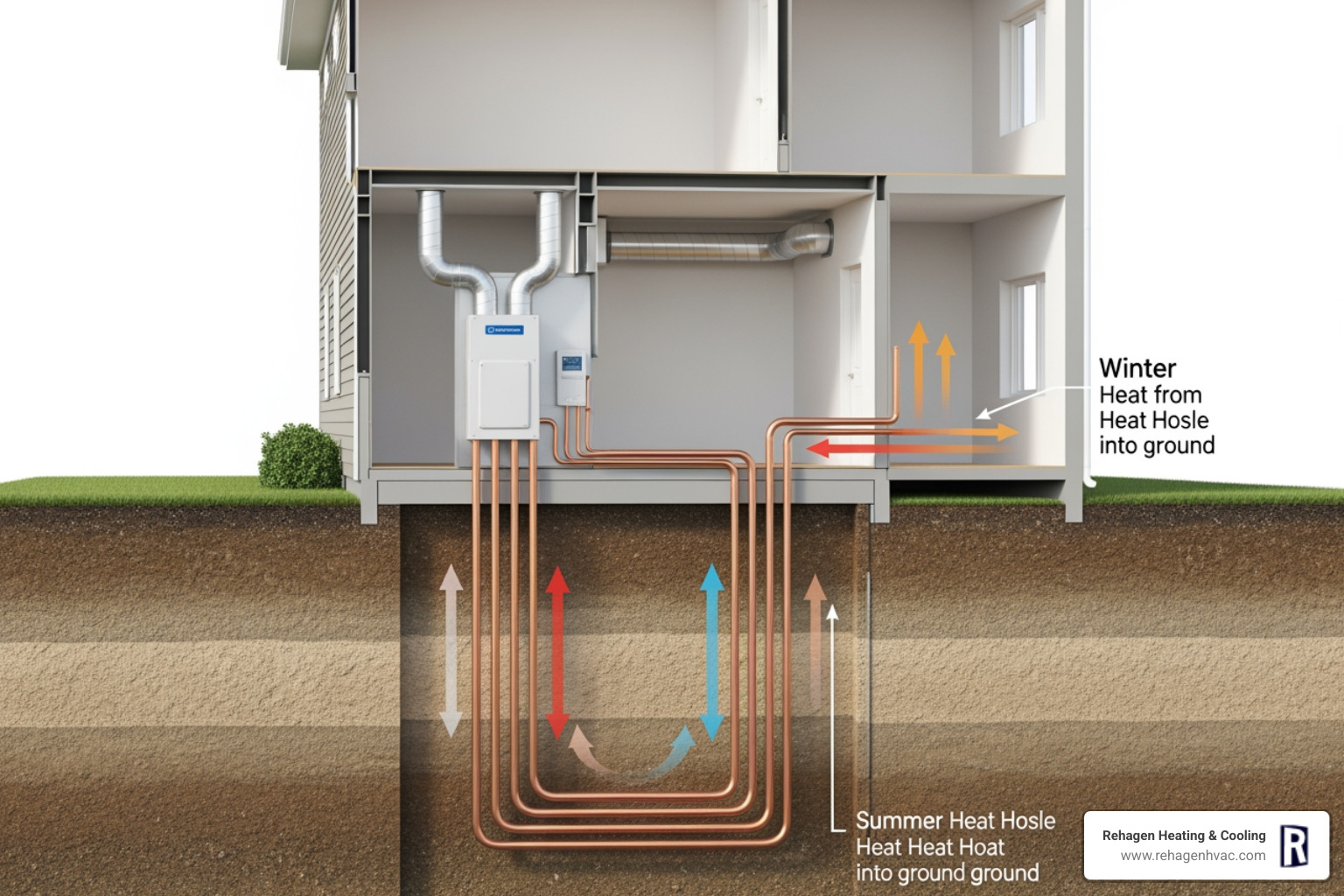
At its heart, a direct exchange geothermal heat pump operates on the same vapor-compression cycle as any heat pump, but with a crucial difference: it directly interacts with the earth. This direct interaction is what makes it so efficient. Let's break down the heat transfer process and how it delivers comfort to your home.
The Key Components of a DX System
The beauty of a DX system lies in its streamlined design and fewer components compared to its water-based counterparts. The core elements working together to keep your home comfortable are:
- Buried Copper Tubing: This is the "exchange" part of direct exchange. Highly conductive copper tubes are installed in the ground, forming the ground loop. These tubes contain the refrigerant that directly interacts with the earth.
- Refrigerant: The lifeblood of the system, this environmentally friendly fluid circulates through the copper tubing, absorbing and releasing heat as it changes phase (evaporates and condenses).
- Compressor: Located within your indoor heat pump unit, the compressor is the powerhouse. It increases the pressure and temperature of the refrigerant, driving the heat transfer process.
- Indoor Heat Exchanger: Also part of your indoor unit, this component facilitates the exchange of heat between the refrigerant and your home's air.
- Air Handler: This fan unit circulates the conditioned air (warm or cool) throughout your home's ductwork, delivering comfort where you need it.
The Heating Cycle: Drawing Warmth from the Earth
When the Central Missouri chill sets in, your DX geothermal system switches into heating mode, working like a heat magnet for your home. Here's how it orchestrates warmth:
- Ground Loop Heat Absorption: The liquid refrigerant circulates through the buried copper tubing. Even on the coldest winter days, the earth's stable underground temperature (50-70°F) is warmer than the refrigerant. This temperature difference causes the refrigerant to absorb heat from the surrounding soil.
- Refrigerant Evaporation: As the refrigerant absorbs heat, it evaporates and turns into a low-pressure, warm gas.
- Compression: This warm, gaseous refrigerant then travels to the indoor unit, where the compressor increases its pressure and temperature even further.
- Heat Release to Indoor Air: The now hot, high-pressure refrigerant gas flows through the indoor heat exchanger. Here, it releases its concentrated heat to the cooler air circulating through your home's ductwork. As the refrigerant cools, it condenses back into a liquid, ready to begin the cycle again. The warmed air is then distributed throughout your home, providing efficient and consistent heating.
It's an incredibly efficient process, moving heat rather than generating it, which means significant energy savings for homeowners in areas like Jefferson City. Learn more about how this technology can transform your home's heating on our Geothermal Heating Jefferson City MO page.
The Cooling Cycle: Sending Heat into the Ground
When summer temperatures soar across Central Missouri, your DX system effortlessly reverses its operation to provide cool, refreshing air. It effectively acts as a heat sponge, pulling unwanted heat from your home and depositing it back into the earth:
- Indoor Air Heat Absorption: Inside your home, the liquid refrigerant absorbs heat from the warm indoor air as it passes over the indoor heat exchanger. This causes the refrigerant to evaporate into a cool, low-pressure gas, simultaneously cooling and often dehumidifying your indoor air.
- Compression: The now warm, gaseous refrigerant then travels to the compressor, where its pressure and temperature are increased.
- Heat Rejection into the Earth: The hot, high-pressure refrigerant gas flows through the buried copper tubing. Since the earth is cooler than the refrigerant, the heat is readily transferred from the refrigerant into the ground. As it releases its heat, the refrigerant condenses back into a liquid, ready to absorb more heat from your home.
- Dehumidification: An added benefit of the cooling cycle is dehumidification. As warm, humid air passes over the cool indoor coil, moisture condenses out, leaving your home feeling drier and more comfortable.
This continuous cycle ensures your home remains an oasis of cool comfort, even on the hottest days. Find more about efficient cooling solutions on our Geothermal Cooling Service Ashland page.
DX vs. Traditional Water-Source Geothermal: The Efficiency Advantage
Understanding the fundamental difference between a direct exchange geothermal heat pump and a traditional water-source geothermal system is key to appreciating the DX advantage. The primary distinction lies in how heat is transferred to and from the earth.
In a traditional water-source geothermal system, there are typically three heat transfers:
- Heat exchange from the ground to a water/antifreeze solution in plastic pipes.
- Heat exchange from the water/antifreeze solution to the refrigerant in the heat pump.
- Heat exchange from the refrigerant to the air circulating in your home.
A DX system streamlines this process significantly, reducing it to just two heat transfers. The refrigerant circulates directly through copper tubing buried in the ground, exchanging heat directly with the earth. This means:
- Heat exchange from the ground to the refrigerant.
- Heat exchange from the refrigerant to the air circulating in your home.
This seemingly small difference has a profound impact on efficiency, system simplicity, and even installation.
| Feature | DX Geothermal | Water-Source Geothermal |
|---|---|---|
| Heat Transfers | 2 (Ground to Refrigerant, Refrigerant to Air) | 3 (Ground to Water, Water to Refrigerant, Refrigerant to Air) |
| Ground Loop Material | Copper tubing | Plastic piping |
| Fluid in Ground Loop | Refrigerant | Water/Antifreeze solution |
| Circulating Pump | No separate pump for ground loop | Requires a separate water circulating pump |
| Antifreeze | Not needed | Required |
Why Fewer Heat Transfers Matter for Your Home
The reduction in heat transfer stages is more than just a technical detail; it translates directly into tangible benefits for you as a homeowner. Each time heat is transferred from one medium to another, there's a small but unavoidable loss of energy. By eliminating one of these steps, DX systems achieve:
- Increased Heat Output: With less energy lost during transfer, more of the earth's thermal energy makes it into your home during heating, and more of your home's heat is effectively removed during cooling.
- Reduced Energy Waste: Less energy loss means your system works more efficiently, requiring less electricity to operate the compressor and fan.
- Higher Efficiency: This streamlined process contributes to the overall superior efficiency of DX systems, allowing them to produce 4-5 times more energy than they consume.
- Simpler Design: Fewer components mean less complexity, which can contribute to greater reliability and easier maintenance.
For these reasons, we believe that understanding Why Geothermal Heating is Ideal is crucial for any Central Missouri homeowner looking for optimal comfort and savings.
The Role of Copper Tubing in a direct exchange geothermal heat pump
Copper is not just any metal; it's a superstar in heat transfer, and its role in a direct exchange geothermal heat pump is absolutely critical. The choice of copper for the buried ground loop is a major factor in the system's efficiency and longevity.
Here's why copper tubing is so advantageous:
- Superior Thermal Conductivity: Copper is an excellent conductor of heat, far surpassing plastic in its ability to transfer thermal energy. This means it can absorb and release heat from the earth more effectively and rapidly.
- Smaller Borehole Requirements: Because copper is so efficient at heat transfer, we can use smaller diameter tubes and require less overall length of tubing in the ground. This translates directly to smaller, less invasive boreholes during installation, preserving your landscaping and reducing installation time and disruption.
- Durability and Corrosion Resistance: Copper is a robust and durable material with a long history of use in underground applications. It forms a protective film in most soils, making it highly resistant to corrosion. For areas with particularly aggressive soil conditions, DX systems can be equipped with a cathodic protection system to further safeguard the tubing. You can learn more about copper's properties and corrosion resistance from resources like the Copper Development Association Inc. and their insights on Corrosion Protection & Resistance.
- Proven Track Record: Copper has been used successfully in refrigeration and plumbing for decades, demonstrating its reliability and suitability for long-term underground service.
This combination of properties makes copper an ideal material for the direct exchange of heat with the earth, ensuring your DX system provides peak performance for years to come.
Design, Applications, and Benefits of DX Systems
The versatility and efficiency of direct exchange geothermal heat pumps make them suitable for a wide array of applications, from cozy homes to light commercial buildings throughout Central Missouri. Our team at Rehagen Heating & Cooling has extensive experience designing and installing these systems to meet diverse needs.
DX geothermal can be an excellent solution for:
- Residential homes, from smaller houses to larger custom properties
- Light commercial buildings such as offices and small facilities
- New construction projects where the ground loop can be planned from the start
- Retrofitting existing homes that are ready for a high-efficiency, waterless upgrade
To see how ground source systems fit into new builds, explore our Ground Source Heat Pumps New Constructions resource.
Common Ground Loop Configurations
One of the significant advantages of DX systems is their flexibility in ground loop configurations. Because they use highly efficient copper tubing and directly exchange heat, they often require a smaller "earth loop" size and are considered among the least invasive geothermal systems to install. The three most common configurations we use are:
- Vertical Loops: Ideal for properties with limited land area or when minimizing surface disruption is a priority. Boreholes are drilled vertically, typically 100 feet deep or less, and copper tubing is inserted. These are common in residential settings in more densely populated areas like Columbia or Jefferson City.
- Horizontal Loops: Best suited for properties with ample land where excavation is feasible. Trenches are dug horizontally, typically 4-6 feet deep, and the copper tubing is laid in loops or S-shapes. This can be a practical option for new construction or larger rural properties.
- Diagonal Loops: A hybrid approach, often used when vertical space is somewhat limited but horizontal trenches are not ideal. The boreholes are drilled at an angle, offering a compromise between vertical and horizontal installations.
All diagonal and vertical systems must be properly grouted from the bottom up to ensure optimal heat transfer and system integrity. This careful installation ensures that the ground loop functions as intended, providing reliable comfort for your home for decades.
The Major Benefits of a direct exchange geothermal heat pump
Choosing a direct exchange geothermal heat pump for your Central Missouri home or light commercial property is an investment in unparalleled comfort, significant savings, and environmental responsibility. We've seen countless homeowners transform their energy consumption and improve their quality of life with these systems.
Here are the major benefits you can expect:
- Exceptional Energy Efficiency: Geothermal systems are celebrated for their efficiency, and DX systems, with their fewer heat transfers, are among the most efficient. They burn no fuel and consume minimal energy beyond the electricity needed to power the compressor and fan. The U.S. Department of Energy highlights that geothermal systems can reduce heating and cooling costs by an average of 30 to 60 percent compared to air-source heat pumps. In fact, DX systems have been proven to produce 4-5 times more energy than they consume.
- Lower Utility Bills: This efficiency directly translates into substantial savings on your monthly energy bills. Owners often enjoy utility bills that are 25% to 70% lower than with conventional systems. The GeoExchange Organization (GEO) notes that heating and cooling costs for a typical 2,000-sq.-ft. home can run as low as $1 a day! We’ve helped homeowners across Central Missouri realize these dramatic savings.
- Environmental Benefits: By utilizing the earth's renewable energy, DX geothermal systems significantly reduce your carbon footprint. A typical 3-ton residential GeoExchange system produces about one pound less Carbon Dioxide (CO2) per hour of use than a conventional system. This reduction in greenhouse gas emissions contributes to a healthier planet and a cleaner environment for our communities.
- Reduced Carbon Footprint: Embracing geothermal technology means you're actively participating in sustainable living, reducing reliance on fossil fuels and contributing to a cleaner atmosphere.
- Consistent Comfort: Geothermal systems provide incredibly consistent heating and cooling because they don't rely on the fluctuating outdoor air temperature. This means no more hot spots or cold drafts, just stable, comfortable temperatures year-round.
- Lower Maintenance: Geothermal systems are known for their reliability and require less maintenance than conventional HVAC units. The underground loop system has a lifespan of 50+ years and typically needs little to no attention.
Ready to explore how these benefits can apply to your home? Check out our guide on how to Maximize Savings on a Geothermal Upgrade.
Frequently Asked Questions about DX Geothermal
We understand that investing in a new heating and cooling system comes with questions. Here are some of the most common inquiries we receive about direct exchange geothermal heat pumps:
What are the maintenance requirements for a DX system?
One of the many appealing aspects of a DX geothermal system is its minimal maintenance requirements. Because the ground loop is buried underground and contains only refrigerant (not water or antifreeze), many of the typical maintenance concerns associated with traditional water-based geothermal systems are eliminated.
- Minimal Maintenance: There's no need for water loop flushing, no antifreeze to monitor or replenish, and no water circulating pump to maintain.
- Indoor Unit Filter Changes: Like any HVAC system, the indoor air handler will require regular filter changes to ensure optimal airflow and indoor air quality. We recommend checking your filters monthly and replacing them as needed.
- Professional Annual Check-ups: We recommend an annual professional tune-up for your indoor heat pump unit. Our NATE-certified technicians will inspect the system, check refrigerant levels, clean components, and ensure everything is operating at peak efficiency. This proactive approach helps prevent minor issues from becoming major problems.
- Sealed Refrigerant Circuit: The refrigerant circuit is completely sealed, minimizing the risk of leaks and ensuring consistent performance over the system's long lifespan.
Are there any historical issues with DX technology?
It's true that like many evolving technologies, direct exchange geothermal heat pump systems faced some challenges in their early development. While the technology was expanding in the 80s and 90s, some early manufacturers designed their equipment similarly to ordinary air-source heat pumps, which led to issues with refrigerant and oil management. Specifically, some older DX geothermal designs experienced oil return issues, where the compressor oil didn't properly return to the compressor, potentially impacting system longevity.
However, modern system design improvements have thoroughly addressed and resolved these historical challenges. Today's DX geothermal systems incorporate advanced refrigerant and oil management strategies, ensuring reliable operation. The technology has evolved significantly since its inception in the 1940s, with continuous improvements in materials, electronic controls, and installation methods. What we offer today is a proven technology that has been refined over decades. For a deeper dive into geothermal technology, explore our Columbia Geothermal Complete Guide.
What sizes do DX geothermal systems come in?
Direct exchange geothermal heat pump systems are available in a range of sizes to suit various residential and light commercial applications. For residential use, DX systems are typically manufactured in sizes ranging from 2 tons (approximately 7.03 KW) to 6 tons (approximately 21.10 KW).
The correct sizing of your DX geothermal system is crucial for optimal performance, efficiency, and comfort. An undersized system may struggle to heat or cool your home adequately, while an oversized system can cycle too frequently, leading to inefficiencies and uneven temperatures.
At Rehagen Heating & Cooling, we emphasize precise sizing based on your home's unique heating and cooling load. Our NATE-certified professionals conduct a thorough load calculation, taking into account factors such as:
- Your home's square footage
- Insulation levels
- Window types and orientation
- Local climate data (relevant for Central Missouri)
- Your family's comfort preferences
This detailed analysis ensures that we recommend and install a DX system that is perfectly matched to your home's needs, providing consistent comfort and maximum energy savings. If you're considering a new HVAC system, understanding proper sizing is key. Visit our Geothermal HVAC System Jefferson City MO page for more information.
Accept Efficient, Waterless Comfort in Your Home
At Rehagen Heating & Cooling, we've dedicated over 40 years to providing Central Missouri with honest service, precision workmanship, and reliable comfort. As the #1 geothermal supplier in the region, we firmly believe that a direct exchange geothermal heat pump represents the pinnacle of home heating and cooling technology.
The simplicity of its waterless design, the superior efficiency gained from fewer heat transfers, and the robust performance of copper tubing combine to deliver unparalleled year-round comfort and significant energy savings. You'll enjoy consistent temperatures, lower utility bills, and the peace of mind that comes from choosing an environmentally responsible heating and cooling solution.
Our NATE-certified professionals are experts in the field, ready to guide you through every step, from initial assessment and precise system sizing to expert installation and ongoing support. We stand by our work with strong warranties, ensuring your investment in a DX geothermal system provides lasting value and comfort.
Accept the future of home comfort with a DX geothermal system. Explore our Geothermal Heat Pumps to learn more, or contact us today to find how we can bring this efficient, waterless comfort to your home.
Related articles

request service
