


Unearthing Efficiency: Your Guide to Ground Source Heat Exchange
Discover superior efficiency and comfort with ground source heat exchange. Learn how this sustainable tech saves money and boosts home value.


Tapping into the Earth's Natural Energy
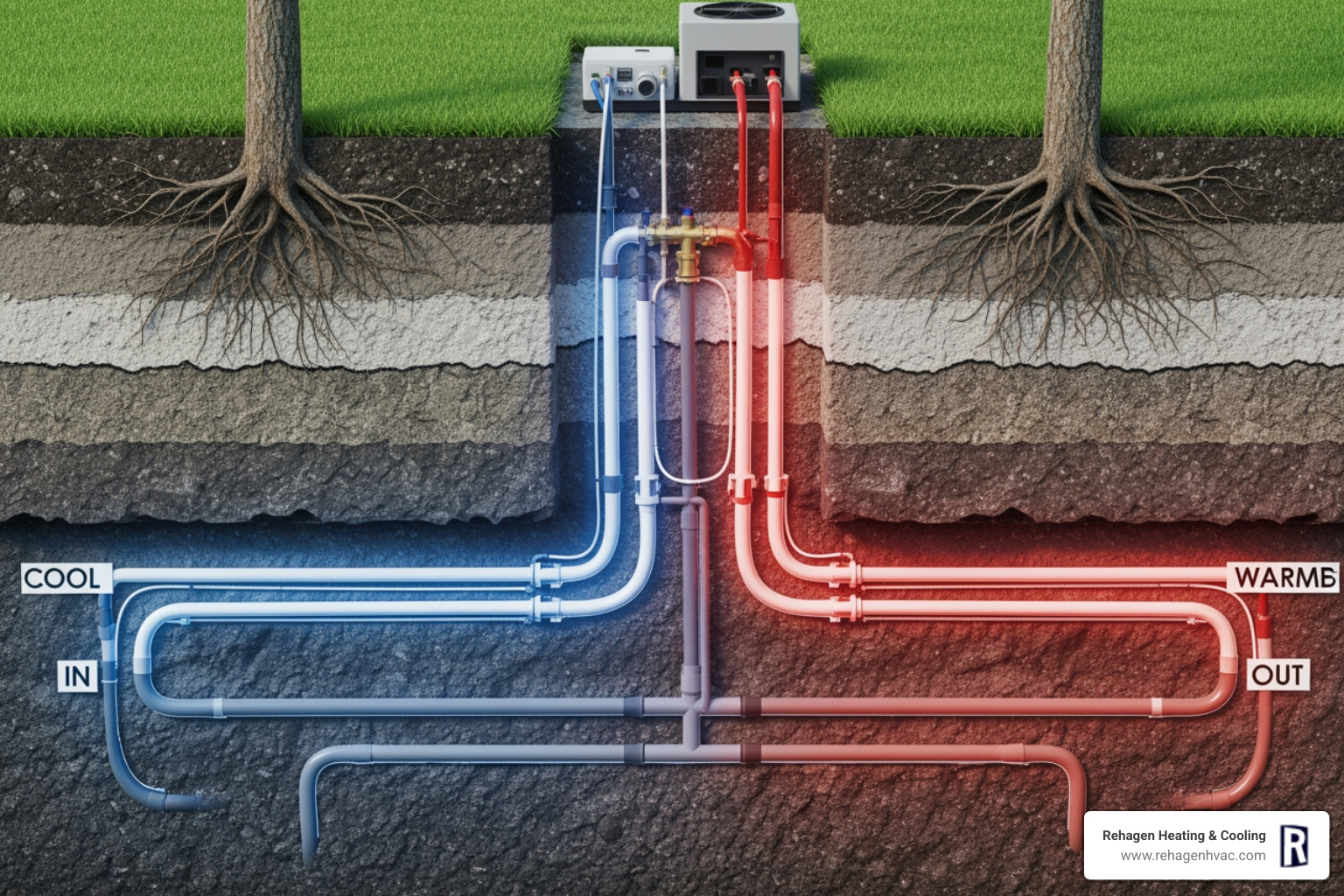
Ground source heat exchange is a technology that uses the stable temperature of the earth—typically between 40°F and 70°F just a few feet below the surface—to heat and cool your home more efficiently than traditional HVAC systems. Unlike surface air temperatures that swing from scorching summers to freezing winters in Central Missouri, the ground maintains a constant temperature year-round. A ground source heat pump leverages this consistency by circulating fluid through buried pipes (called a ground loop), extracting heat from the earth in winter and depositing excess heat back into the ground in summer.
Quick Answer:
- What it is: A heating and cooling system that exchanges heat with the ground through buried pipes
- How it works: Circulates fluid underground to absorb or release heat, then uses a heat pump to condition your home
- Key benefit: 25-72% more efficient than conventional systems because ground temperature stays constant
- Lifespan: Indoor components last 25+ years; ground loops can last 50-200 years
For Missouri homeowners tired of unpredictable energy bills and HVAC breakdowns during temperature extremes, ground source heat exchange offers a reliable alternative. While the upfront installation involves drilling or trenching on your property, the long-term payoff includes dramatically lower utility costs, quieter operation, and freedom from the maintenance headaches of traditional furnaces and air conditioners. Learn more about geothermal HVAC solutions or contact Rehagen Heating & Cooling for a consultation.
How Ground Source Heat Exchange Works
Imagine a giant, natural battery buried just beneath your feet. That's essentially what the earth acts as for a ground source heat exchange system. While the air temperature above ground can fluctuate wildly in Central Missouri—from blistering summer highs to frigid winter lows—the temperature a few feet below the surface remains remarkably consistent. This stable subterranean temperature, often averaging around 50-55°F in our region, is the secret to geothermal efficiency.
The core of a ground source heat exchange system is the geothermal heat pump, which works on the same principle as your refrigerator or air conditioner, but on a larger scale and with the earth as its primary heat source or sink. Instead of exchanging heat with the variable outdoor air, it exchanges heat with the stable ground.
The Refrigeration Cycle in Action
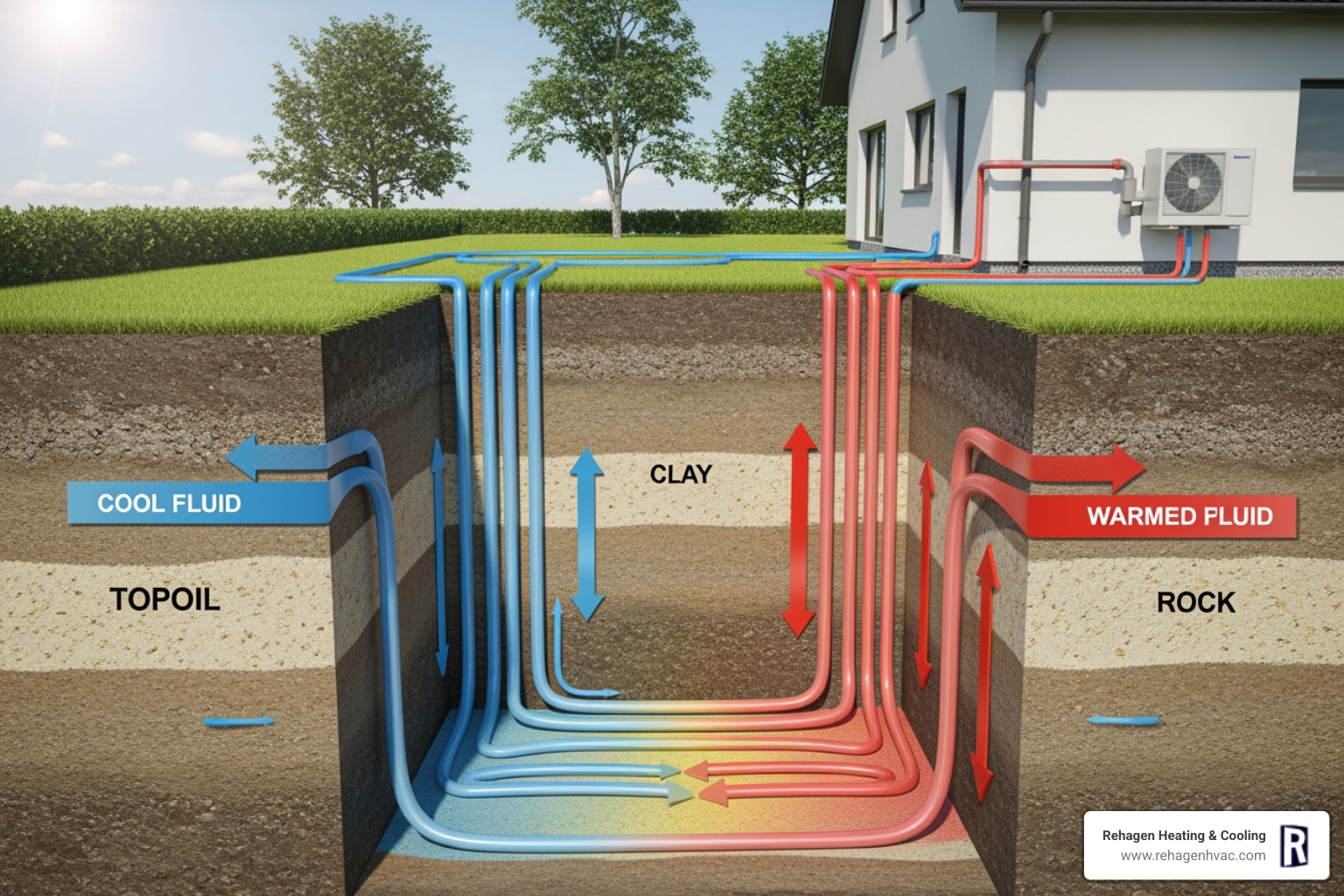
Winter Heating Process: When winter arrives and you need to warm your home, the heat pump circulates a fluid (usually a mixture of water and antifreeze) through the underground loop system. This fluid absorbs the natural heat from the earth, which is warmer than the outdoor air. The warmed fluid then flows back to the heat pump unit inside your home. Here, a refrigerant within the heat pump absorbs the heat from the fluid, compresses it to increase its temperature, and then transfers this amplified heat into your home's air distribution system (ductwork) or radiant floor heating. The now-cooled fluid returns to the ground loop to collect more heat, and the cycle continues.
Summer Cooling Process: In the scorching Central Missouri summer, the process reverses. The heat pump extracts excess heat from your home's indoor air. This heat is then transferred to the fluid circulating in the ground loop. As the fluid flows through the cooler earth, it dissipates the unwanted heat into the ground, which acts as a "heat sink." The now-cooled fluid returns to your home to absorb more heat, providing efficient and consistent cooling. This clever reversal allows your home to stay comfortable year-round.
The earth essentially functions as a massive, stable thermal battery, ready to absorb or provide heat whenever your home needs it. This constant temperature enables the heat pump to operate with incredible efficiency, making it a powerful and reliable solution for heating and cooling. For more insights into why this system is so effective, explore Why Geothermal Heating is Ideal.
The Geothermal Advantage Over Air-Source Heat Pumps
While air-source heat pumps also use the refrigeration cycle, they rely on the outdoor air as their heat source or sink. This fundamental difference gives ground source heat exchange systems several distinct advantages, especially in areas like Central Missouri with significant seasonal temperature swings.
Superior Efficiency: This is perhaps the biggest benefit. Air-source heat pumps struggle to perform efficiently when outdoor temperatures are extremely cold or hot. When it's 10°F outside, an air-source unit has to work much harder to extract heat from the frigid air. Similarly, on a 95°F day, it's inefficient to dump heat into already hot air. Geothermal systems, however, consistently exchange heat with the stable ground temperature, leading to significantly higher efficiencies. Ground source heat pumps can achieve efficiencies of 300% to 600%, compared to 175% to 250% for central ducted air-source heat pumps. This translates directly into lower energy consumption and lower utility bills for you.
Weather Independence: Unlike air-source units that see their performance drop during extreme weather, ground source systems maintain consistent heating and cooling output regardless of how hot or cold it gets outside. This means reliable comfort for your home, even during the most severe Central Missouri weather events.
Whisper-Quiet Operation: One of the first things people notice about a geothermal system is how quiet it is. With the main components, including the large fans, located indoors and the ground loops buried, there's no noisy outdoor unit disrupting your peace or your neighbors'.
Remarkable Longevity: Geothermal systems are built to last. The indoor heat pump components are estimated to have a lifespan of 25 years or more, which is significantly longer than conventional HVAC equipment. Even more impressive, the buried ground loops can last 50 to 200 years! This incredible durability means fewer replacements and a longer return on your investment.
To learn more about how geothermal systems can keep you comfortable year-round, even during the warmest months, check out our insights on Geothermal Cooling Service Ashland.
Types and Components of Geothermal Systems
A complete ground source heat exchange system is a marvel of engineering designed to harness the earth's natural thermal energy. While the specifics can vary, every system consists of three primary components working in harmony:
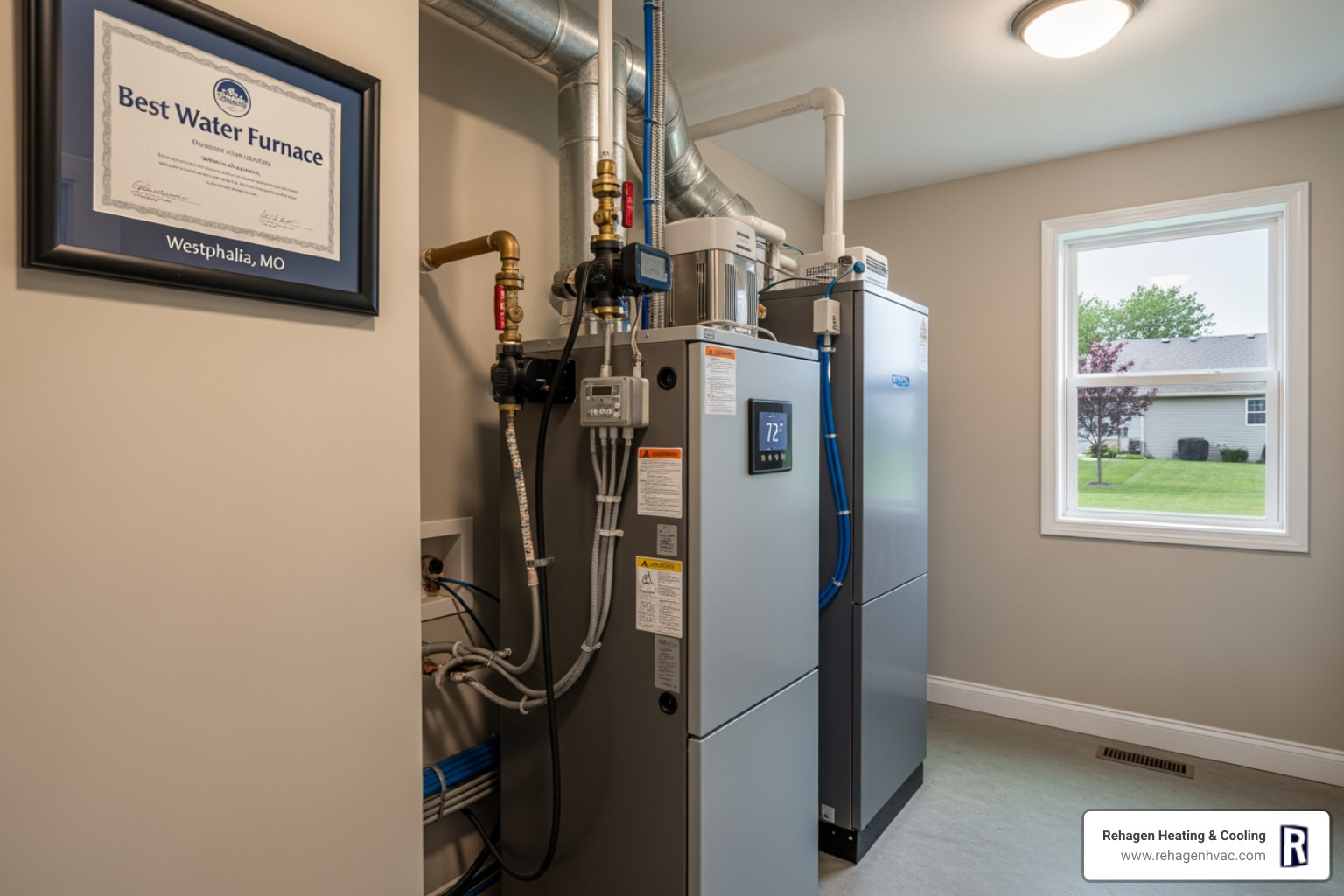
The Heat Pump Unit: This is the heart of the system, typically located inside your home or building. It's similar in appearance to a conventional furnace or air handler. The heat pump is responsible for circulating the refrigerant, compressing it, and transferring the heat between the ground loop fluid and your home's air distribution system. Modern heat pump units often feature advanced technologies like two-speed compressors or variable-speed fans, which further improve efficiency and comfort.
The Ground Loop (Ground Heat Exchanger): This is the network of pipes buried beneath the earth's surface or submerged in a water body. It's where the actual heat exchange with the ground takes place. The type of ground loop chosen depends on several factors, including available land, soil conditions, and budget.
The Heat Distribution System: This is the part of the system that delivers the conditioned air or water throughout your home. It can be traditional ductwork for forced-air heating and cooling, or it can be a hydronic system, such as radiant floor heating or baseboard radiators.
Together, these components create a highly efficient and sustainable HVAC solution. For more details on how these systems integrate into a comprehensive energy strategy, read our guide on Geothermal Energy Systems Columbia.
Understanding Ground Loop Configurations
The ground loop is a critical element, and its configuration is chosen based on your property's specific characteristics and needs. We primarily categorize ground loops into two main types: closed-loop and open-loop systems, with several subtypes within closed-loop options.
Closed-Loop Systems
Closed-loop systems are the most common type and involve a continuous loop of buried or submerged pipes through which a heat-transfer fluid (usually water and antifreeze) circulates. This fluid is entirely isolated from the surrounding environment.
Vertical Loops: Ideal for properties with limited land area, vertical loops involve drilling several boreholes, typically 100 to 400 feet deep and spaced about 20 feet apart. U-shaped pipes are inserted into these boreholes, which are then typically grouted to ensure good thermal contact with the surrounding earth. Vertical loops minimize surface disruption and are often chosen for larger homes or commercial buildings in Central Missouri where space is at a premium.
Horizontal Loops: These are often the most cost-effective option for residential properties in Central Missouri with sufficient land. Horizontal loops require trenches to be dug (typically 3 to 8 feet deep), where pipes are laid either in parallel runs or in a "slinky" configuration (overlapping coils) to fit more piping into a shorter trench. This method involves more excavation but avoids deep drilling. For new construction, we can sometimes integrate horizontal loops with the trenches already dug for foundations and utility wiring, saving on excavation costs.
Pond/Lake Loops: If your property in Central Missouri has an adequately sized pond or lake, this can be the most economical closed-loop option. Coils of pipe are submerged at least eight feet below the surface to prevent freezing, where they can exchange heat with the stable water temperature.
Open-Loop Systems
Open-loop systems, also known as groundwater heat pumps, use an existing well or a surface water body as the heat exchange medium. Water is drawn from the well or body, circulated through the heat pump, and then returned to the same aquifer or source.
Groundwater Wells: These systems pump groundwater directly from a supply well, run it through the heat pump's heat exchanger, and then discharge it into a return well or suitable drainage. While highly efficient due to direct contact with water, open-loop systems are more sensitive to local geology, water quality, and environmental regulations regarding water usage and discharge. Proper balancing and reinjection of water are crucial to prevent aquifer depletion.
Standing Column Wells: A specialized type of open-loop system, standing column wells draw water from a deep rock well. Water is circulated through the heat pump, and a portion is returned to the top of the well, while some is drawn from the bottom. This creates a continuous flow within the well, optimizing heat exchange.
Choosing the right ground loop configuration is a critical decision that we help our Central Missouri clients steer, ensuring the system is optimized for their property and provides maximum efficiency. For those considering geothermal for new builds, explore Ground Source Heat Pumps New Constructions.
Materials and Installation for ground source heat exchange
The longevity and efficiency of a ground source heat exchange system heavily depend on the quality of the materials used and the precision of the installation.
Durable Piping
For the ground loop itself, the industry standard is High-Density Polyethylene (HDPE) pipe. This material is chosen for its exceptional durability, flexibility, and resistance to corrosion, chemicals, and impact. HDPE can withstand the stresses of being buried underground for decades, often guaranteed for 50 years or more, and expected to last well over a century. Other high-performance plastic piping materials like Crosslinked Polyethylene (PEX), Polyethylene of Raised Temperature (PE-RT), and Polypropylene (PP) are also used for various parts of the system, such as manifolds or interior piping, offering similar benefits. These materials ensure efficient heat transfer and a leak-free system for the long haul.
Professional Installation
Installing a ground source heat exchange system is a complex job that goes far beyond typical HVAC installations. It requires specialized knowledge and equipment, including geological assessments, drilling or trenching expertise, and precise system design.
Key installation considerations include:
- Site Assessment: Before any digging begins, we conduct a thorough site assessment to understand your property's soil type, bedrock depth, water table levels, and overall thermal conductivity. This information is crucial for accurately sizing and designing the ground loop.
- Drilling/Trenching: Depending on the chosen loop configuration (vertical or horizontal), specialized equipment is used to dig trenches or drill boreholes. This part of the installation is the most labor-intensive and often accounts for a significant portion of the upfront cost.
- System Sizing and Integration: The heat pump unit must be precisely sized to meet your home's heating and cooling demands. This involves detailed calculations using industry standards like ACCA Manual J for load calculations and Manual S for equipment selection. The heat pump is then seamlessly integrated with your home's existing (or new) ductwork or hydronic distribution system.
- Refrigerant Management: For systems that use refrigerant, proper charging and sealing of the lines are paramount. This must be performed by an EPA-certified technician to ensure optimal efficiency and environmental compliance.
- Testing and Verification: After installation, the entire system undergoes rigorous testing, including pressure testing the ground loop and verifying air flow and duct leakage, to ensure everything is operating correctly and efficiently.
Because of these complexities, work with experienced and qualified professionals, like our NATE-certified technicians at Rehagen Heating & Cooling, who understand the unique requirements of geothermal installations in Central Missouri. Our expertise ensures your system is installed to the highest standards, providing reliable comfort for decades. For expert installation services, including system design and setup, visit Geothermal HVAC System Jefferson City, MO.
The Best Advantages of Geothermal Technology
Investing in a ground source heat exchange system is a decision that pays dividends in comfort, cost savings, and environmental responsibility. Homeowners in Central Missouri who choose geothermal often rave about the benefits.
Superior Energy Efficiency
This is the hallmark of geothermal technology. Because it relies on the earth's stable temperature rather than the fluctuating outdoor air, a ground source heat pump can operate with incredible efficiency. These systems typically use 25% to 50% less electricity than conventional heating and cooling systems. In fact, they can reduce energy consumption and corresponding emissions up to 44% compared with air-source heat pumps and up to 72% compared with electric resistance heating with standard air-conditioning equipment. This means for every unit of electricity consumed, the system delivers 3 to 6 units of thermal energy. This translates directly into substantial savings on your monthly utility bills. To find how much you could save, check out Maximize Savings on a Geothermal Upgrade.
System Longevity and Low Maintenance
Geothermal systems are built for the long haul. The buried ground loops are incredibly durable, often carrying warranties for 25 to 50 years and expected to last 50 to 200 years. The indoor heat pump unit typically lasts 25 years or more. This exceptional lifespan means you won't be replacing your HVAC system nearly as often as you would with conventional units. Furthermore, because the ground loop is buried and the indoor unit is protected from the elements, geothermal systems require very little maintenance compared to traditional HVAC, which often needs seasonal tune-ups for outdoor components.
Quiet Operation
One of the most appreciated benefits is the quietness of a geothermal system. Without a noisy outdoor condensing unit or fan, you'll enjoy a peaceful home environment, free from the hum and whir of traditional air conditioners.
Improved Comfort and Humidity Control
Geothermal systems provide consistent, even heating and cooling throughout your home. They avoid the hot and cold spots often associated with conventional systems, creating a more comfortable living space. Additionally, these systems are excellent at controlling indoor humidity, maintaining a comfortable 50% relative humidity, which is particularly beneficial during the humid Central Missouri summers.
Environmental Benefits and Reduced Carbon Footprint
By significantly reducing electricity consumption, ground source heat exchange systems play a crucial role in lowering your home's carbon footprint. They eliminate the need for fossil fuels for heating, reducing greenhouse gas emissions. Annually, using a ground source heat pump instead of a high-efficiency furnace can save tons of greenhouse gas emissions. The U.S. Environmental Protection Agency (EPA) has even called ground source heat pumps the most energy-efficient, environmentally clean, and cost-effective space conditioning systems available. By choosing geothermal, you're investing in a cleaner, more sustainable future for our community. For those looking to make the switch, consider Upgrading to Geothermal Heating System.
Key Benefits of Geothermal Systems
- Exceptional Energy Savings: Dramatically lower utility bills year-round.
- Best Durability: Components designed to last for decades, minimizing replacement costs.
- Minimal Maintenance: Less frequent service calls and fewer worries.
- Silent Operation: Enjoy a peaceful home without outdoor unit noise.
- Consistent Comfort: Even temperatures and superior humidity control.
- Eco-Friendly: Significantly reduces your carbon footprint and reliance on fossil fuels.
- Increased Property Value: A valuable upgrade that improves your home's appeal.
Frequently Asked Questions about Geothermal Energy
We often hear many questions from homeowners in Central Missouri who are curious about the benefits and practicalities of ground source heat exchange. Here are some of the most common inquiries we address:
How long do geothermal systems last?
Geothermal systems are renowned for their incredible longevity. The components that are buried underground—the ground loops themselves—are made from highly durable plastic, typically HDPE, and are designed to last an astonishing 50 to 200 years. This means the ground loop will likely outlive your home! The indoor heat pump unit, which contains mechanical parts, typically has an estimated lifespan of 25 years or more. This is significantly longer than conventional furnaces and air conditioners, which usually last 10-15 years. This extended lifespan, combined with their minimal maintenance requirements, makes geothermal a truly long-term investment in your home's comfort and efficiency. Some ground heat exchanger manufacturers even offer up to a 50-year warranty on their loops.
Can a ground source heat exchange system provide hot water?
Yes, absolutely! Most ground source heat pumps are equipped with an auxiliary device called a desuperheater. This clever component uses excess heat generated during the cooling process to preheat your home's domestic hot water. In some cases, a desuperheater can provide 25% to 50% of your home's hot water needs at no additional operating cost. This feature adds another layer of energy savings and convenience, making your geothermal system even more efficient year-round.
What are the main challenges of installing a geothermal system?
While the benefits of geothermal are clear, the initial installation does present a few unique considerations:
- Upfront Investment: The primary challenge is the higher initial cost compared to traditional HVAC systems. This is mainly due to the specialized drilling or trenching required for the ground loop installation. However, it's crucial to remember that these systems offer dramatically lower operating costs and a much longer lifespan, leading to significant long-term savings and a favorable payback period.
- Site Assessment: A thorough site assessment is essential. We need to evaluate your property's geology, soil conditions, and available space to determine the most suitable and efficient ground loop configuration. This process ensures the system is optimized for your specific location.
- Space for Loops: Depending on the type of ground loop chosen, sufficient land may be required for horizontal installations. If space is limited, vertical drilling becomes necessary, which can increase complexity.
- Drilling Requirements: The drilling or trenching process can be disruptive during installation. However, once completed, the system is largely out of sight and silent.
- Importance of Qualified Installers: Due to the complexity and specialized nature of geothermal technology, it's paramount to work with experienced and accredited professionals. Proper design and installation are critical for the system's efficiency and longevity. Our NATE-certified technicians at Rehagen Heating & Cooling have the expertise to handle these challenges, ensuring a seamless and effective installation for our Central Missouri customers.
Despite these considerations, the long-term advantages typically far outweigh the initial problems. Our team is here to guide you through every step of the process. For reliable geothermal solutions, including installation and service, contact us or visit Geothermal Heat Pump Services Westphalia, MO.
Conclusion: Accept a Sustainable Future with Geothermal Comfort
The journey to understanding ground source heat exchange reveals a technology that is not only remarkably efficient but also incredibly robust and environmentally friendly. For homeowners in Central Missouri, where seasonal temperature extremes can put a strain on conventional HVAC systems, geothermal offers a stable, reliable, and cost-effective alternative.
We've explored how these systems harness the earth's consistent temperature for superior heating and cooling, how they differ from traditional air-source heat pumps, and the various configurations of ground loops that make them adaptable to almost any property. The advantages are clear: unparalleled energy efficiency, significant reductions in utility bills, exceptional longevity with minimal maintenance, whisper-quiet operation, and a substantial positive impact on our environment.
At Rehagen Heating & Cooling, we believe in providing our community with the highest quality, most reliable comfort solutions. With over 40 years of experience and a team of NATE-certified professionals, we are proud to be a leading geothermal expert in Central Missouri. We are committed to precision workmanship and honest service, ensuring your investment in a ground source heat exchange system brings you lasting comfort and peace of mind.
Accept the future of home comfort and energy independence. Find the difference that earth-powered heating and cooling can make for your home.
Related articles
request service
